Murphy Solutions: Designing for Zero Failure in Crisis Management
Murphy Solutions: Designing for Zero Failure in Crisis Management
Timeline
3 months
Role
UX Designer
Team
SCHMACK · Senior Designer
Figma, Miro
BACKGROUND
A critical B2B platform used across high-risk client environments, from nuclear power plants to commercial housing, connecting client reporting interfaces with internal response operations.
PROBLEM
In critical emergency environments, standard UI conventions fail under stress. How do we architect a deterministic, zero-friction SOS and dispatch platform that non-expert clients can use to report crises instantly, while providing SWAT and fire response units with total accuracy and clarity to coordinate intervention? My job was to redefine the product architecture to simplify navigation, clarify emergency communication, and boost operator confidence across both web and app interfaces.
PROBLEM
In critical emergency environments, standard UI conventions fail under stress. How do we architect a deterministic, zero-friction SOS and dispatch platform that non-expert clients can use to report crises instantly, while providing SWAT and fire response units with total accuracy and clarity to coordinate intervention? My job was to redefine the product architecture to simplify navigation, clarify emergency communication, and boost operator confidence across both web and app interfaces.
INSIGHTS
The architecture centered on cross-channel familiarity: a shared design system, high-contrast status signals, and structured visual hierarchy that made critical information immediately readable for both the client and the response team.

SOLUTION
We began by auditing all existing user journeys and interface components to understand how they connected. This revealed usability gaps, visual inconsistencies, and areas where the system failed to scale effectively.
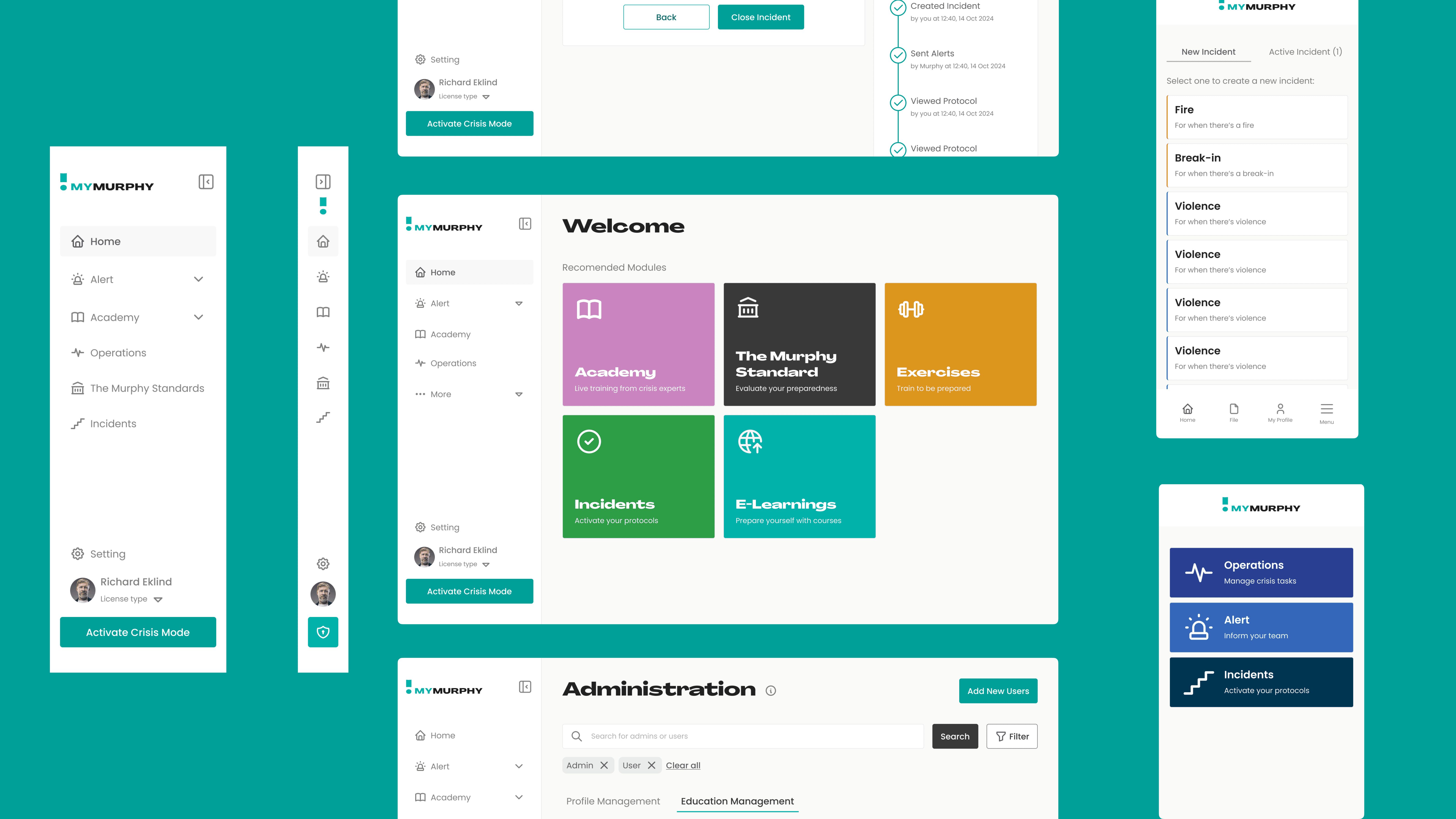
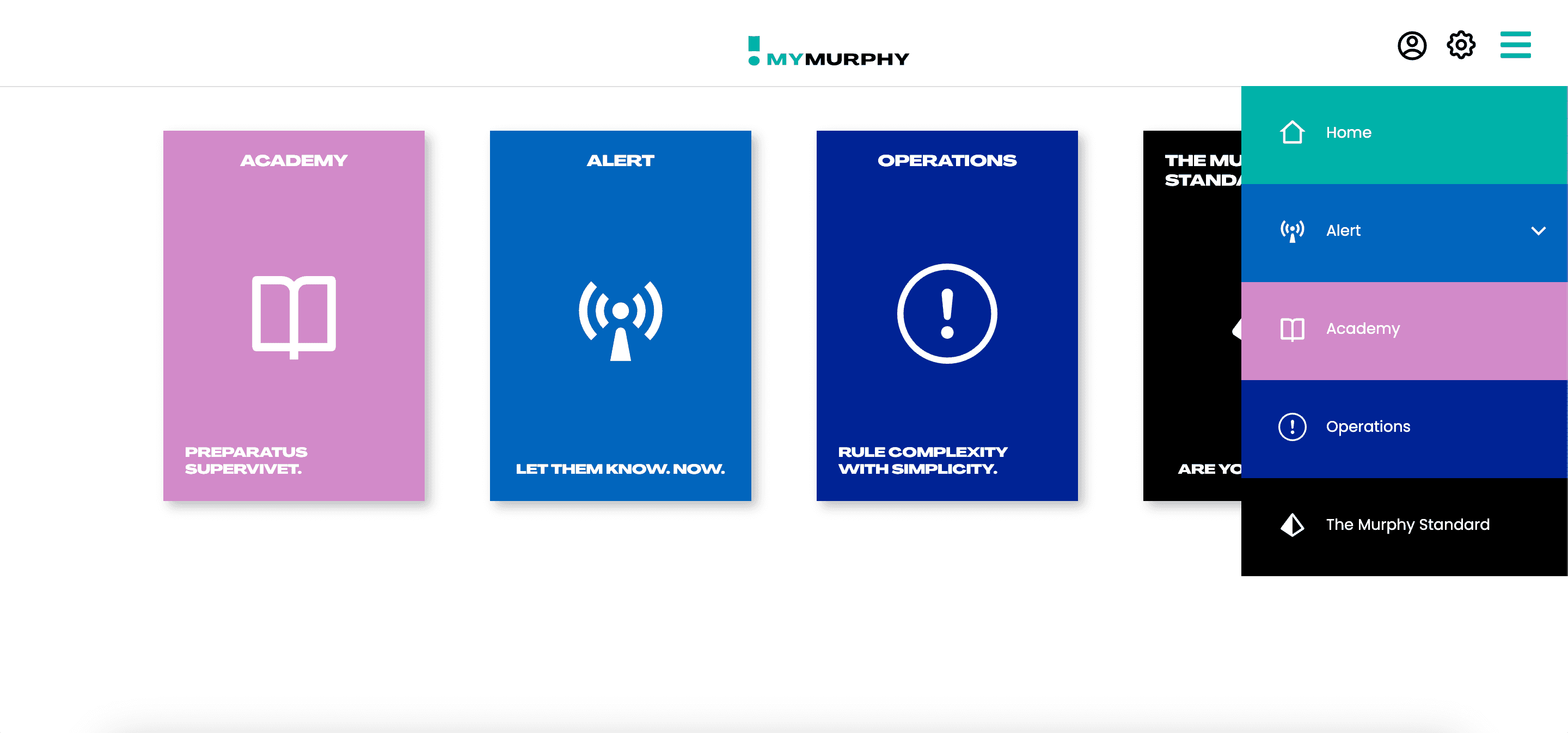
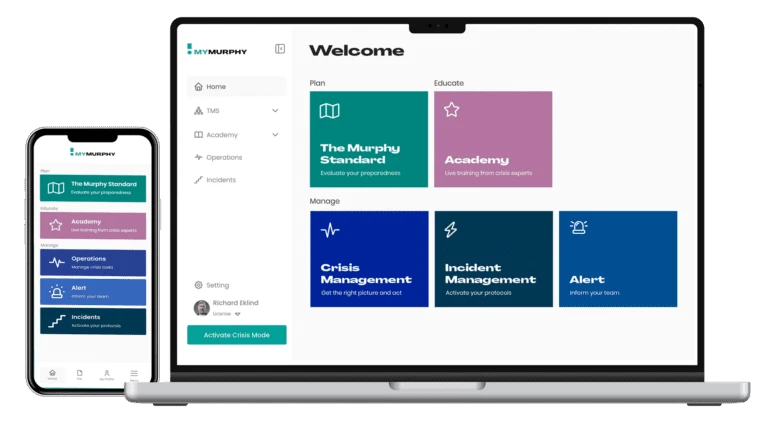
I designed a cross-channel system spanning the client-facing web and mobile app alongside the responder CRM. Components were built for rapid glanceability, high contrast, and a structured hierarchy that stayed readable in high-pressure moments.

On mobile, the SOS flow lets client personnel report an incident, define severity, and connect with Murphy staff in minimal steps. Fail-safe visual triggers prevented accidental action without creating alert fatigue. In the command CRM, incident views organized live distress signals and response workflows for fast, coordinated triage.

IMPACT
The redesigned system made critical reporting and response more reliable end to end, linking client distress signals to responder intervention through one clear operating model.
Scale to over 250+ enterprises and 75+ municipalities.
Replaced chaotic legacy workflows with an intuitive command dashboard, aggressively reducing cognitive load and achieving an average onboarding time of just 2 hours.
Redesigned user flows for agile, continuous crisis training, supporting over 4,000+ rapid sessions across global business and public sectors.
LEARNINGS
Design Learnings & Iterations
Simplicity under extreme stress is a functional safety mechanism: hierarchy must prioritize immediate task execution and eliminate ambiguity. Deterministic interaction matters more than novelty in high-stakes environments, because predictable components build confidence the moment a crisis occurs. Designing systems for high-risk domains also requires tight cross-functional ownership across design, product, and engineering.
Wanna ride this wave with me?
Hit me up!
Wanna ride this wave with me?
Hit me up!
Murphy Solutions: Designing for Zero Failure in Crisis Management
Timeline
3 months
Role
UX Designer
Team
SCHMACK · Senior Designer
Tools
Figma, Miro
BACKGROUND
A critical B2B platform used across high-risk client environments, from nuclear power plants to commercial housing, connecting client reporting interfaces with internal response operations.
PROBLEM
In critical emergency environments, standard UI conventions fail under stress. How do we architect a deterministic, zero-friction SOS and dispatch platform that non-expert clients can use to report crises instantly, while providing SWAT and fire response units with total accuracy and clarity to coordinate intervention? My job was to redefine the product architecture to simplify navigation, clarify emergency communication, and boost operator confidence across both web and app interfaces.
INSIGHTS
The architecture centered on cross-channel familiarity: a shared design system, high-contrast status signals, and structured visual hierarchy that made critical information immediately readable for both the client and the response team.
SOLUTION
We began by auditing all existing user journeys and interface components to understand how they connected. This revealed usability gaps, visual inconsistencies, and areas where the system failed to scale effectively.
I designed a cross-channel system spanning the client-facing web and mobile app alongside the responder CRM. Components were built for rapid glanceability, high contrast, and a structured hierarchy that stayed readable in high-pressure moments.
On mobile, the SOS flow lets client personnel report an incident, define severity, and connect with Murphy staff in minimal steps. Fail-safe visual triggers prevented accidental action without creating alert fatigue. In the command CRM, incident views organized live distress signals and response workflows for fast, coordinated triage.
IMPACT
The redesigned system made critical reporting and response more reliable end to end, linking client distress signals to responder intervention through one clear operating model.
Scale to over 250+ enterprises and 75+ municipalities.
Replaced chaotic legacy workflows with an intuitive command dashboard, aggressively reducing cognitive load and achieving an average onboarding time of just 2 hours.
Redesigned user flows for agile, continuous crisis training, supporting over 4,000+ rapid sessions across global business and public sectors.
LEARNINGS
Design Learnings & Iterations
Simplicity under extreme stress is a functional safety mechanism: hierarchy must prioritize immediate task execution and eliminate ambiguity. Deterministic interaction matters more than novelty in high-stakes environments, because predictable components build confidence the moment a crisis occurs. Designing systems for high-risk domains also requires tight cross-functional ownership across design, product, and engineering.
Wanna ride this wave with me?
Hit me up!